
A little boy sat at the breakfast table, pointing at the orange juice. “Ooo…” he said, stretching the sound like taffy. His mom leaned closer. “Juice?” she asked, smiling. “Do you want juice?” He nodded, trying again. “Oo-joo.”
That exchange lasted seconds, but it carried the weight of weeks of therapy practice. His mom could have simply poured the juice. Instead, she paused, prompting him, waiting, encouraging. And that pause, the deliberate space she gave, was worth more than the drink.
This is what parental involvement in speech therapy looks like: ordinary moments, transformed into stepping stones.
Therapy sessions matter, of course. But it’s at home, in the living rooms, kitchens, playgrounds, and bedtime routines, where the real breakthroughs often happen. Research shows it, but more importantly, families live it. Children whose parents actively participate in therapy see faster skill growth, stronger confidence, and more seamless use of language in daily life.
This guide is for parents ready to step into that role, not as therapists, but as partners.
The Power of Parents in the Therapy Process
More Than Extra Practice
When Vanderbilt researchers trained parents in simple speech therapy strategies, the results surprised even the professionals: children made as much progress as they did with therapist-led sessions. Why? Because parents are there when it matters, every day.
Think of it this way: a therapist might see your child for one or two hours a week. You’re there for the hundreds of other hours. That makes you the bridge, carrying therapy from the clinic into the real world.
The benefits are clear:
- Daily repetition cements skills.
- Family encouragement fuels motivation.
- Practice at home speeds up progress and helps kids use new skills outside the clinic.
- Long-term outcomes improve when parents reinforce goals consistently.
One therapist described it like teaching swimming: “I can coach a child in the pool once a week. But if the parents practice with them between lessons, they don’t just learn faster, they feel safer and stronger in the water.”
Why Home Matters
Natural Learning Environments
Children don’t learn communication in laboratories. They learn it while asking for a snack, chasing the dog, or negotiating bedtime. Home is where language happens. That makes it the perfect practice ground.
A clinic can feel formal. Home feels familiar. And familiarity builds confidence, because a child doesn’t need to translate skills into “real life.” They’re already there.
More Opportunities, Less Pressure
Therapy sessions are precious but limited. Home offers hundreds of practice chances every day. The beauty is, none of them needs to feel like homework. Parents can fold practice into routines, pouring cereal, reading a story, brushing teeth, without carving out “extra” time.
A Family Affair
When everyone is on board, siblings, grandparents, and even babysitters, the child receives consistent cues and encouragement. That consistency creates a supportive communication culture, one where skills stick.
Your Role as a Parent: Partner, Not Replacement
Working With Your Speech-Language Pathologist
Parents sometimes worry: Am I supposed to become the therapist? The answer is no. Your role is to extend, not replace. Think of your child’s Speech-Language Pathologist (SLP) as the architect, designing the therapy plan. You’re the builder, bringing it to life day by day.
That partnership works best when there’s open communication:
- Share information. Let your SLP know about your child’s daily communication, what’s working, what’s frustrating, and what moments feel like breakthroughs.
- Learn strategies. Watch, ask questions, and practice techniques during sessions. Small adjustments can make a big difference at home.
- Align goals. Therapy should fit your child’s world. If your family values mealtime conversation, your SLP can shape goals that naturally fit the dinner table.
Building Communication Skills at Home
Success doesn’t come from flawless execution; it comes from consistency, observation, and encouragement. That means watching closely for every attempt your child makes, whether it’s a full sentence or a simple gesture. A nod, a look, a half-formed sound, all of these are communication attempts worth noticing. Responding with patience, even on days when progress feels slow, tells your child their voice matters. And when you celebrate the smallest victories, like the first clear attempt at a sound, or the courage to ask for help, you build confidence that fuels learning far more than correction ever could.
Practical Ways to Weave Therapy Into Daily Life
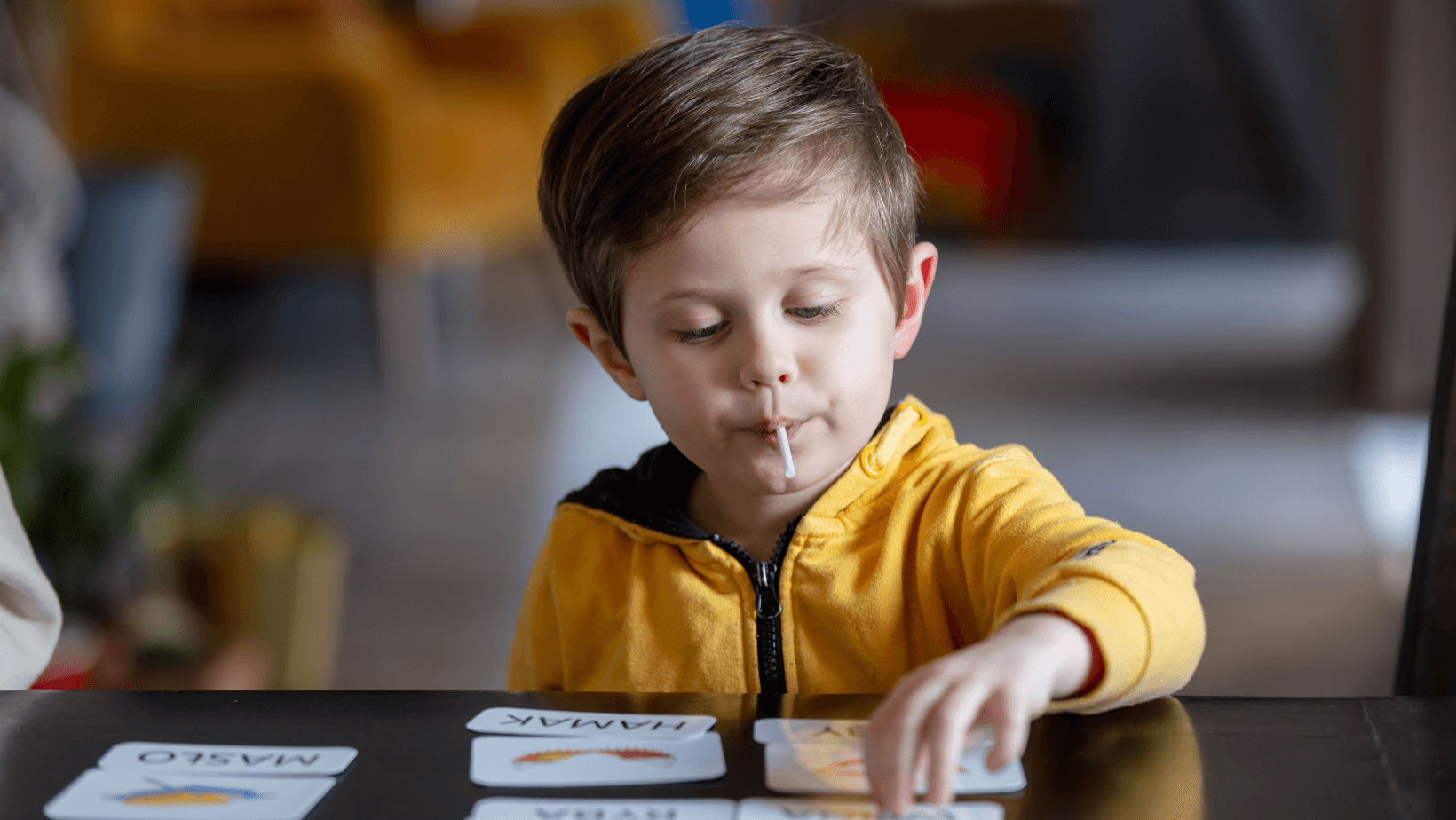
Mornings, mealtimes, and bedtimes aren’t just routines; they’re built-in speech practice sessions. Take mornings: when you’re helping your child get dressed, narrating the process, “First socks, then shoes”, provides a natural rhythm of sequencing. Offering choices between a blue shirt and a red one not only builds vocabulary but also empowers your child to communicate preferences. Even brushing teeth can be an opportunity: “Say toothbrush, please,” gives practice in requesting.
At the table, mealtime conversations turn food into lessons. Naming what’s on the plate, describing textures and colors, and encouraging your child to ask for seconds all expand vocabulary and sentence use. Even turn-taking with simple questions, “Do you like the carrots?”, helps them practice social exchanges. One parent once described how her child learned the word strawberry because they sliced berries together every morning. The act became ritual, and the word became part of the family’s shared language.
Evenings, by contrast, provide quiet, predictable opportunities. Reading stories together allows children to predict what happens next, ask questions, and retell events in their own words. Bedtime routines can also include narrating steps, “First we brush teeth, then pajamas, then story”, which reinforces sequencing and memory. And reflecting on the day’s highlights, even briefly, not only encourages conversation but also strengthens connection before sleep.
Play as Therapy
Children learn best through play, which makes it one of the most powerful tools for reinforcing therapy goals. Structured games like “Simon Says” or board games build turn-taking, listening, and direction-following. Pretend play, whether it’s running a “grocery store” or hosting a tea party with stuffed animals, creates opportunities to practice functional communication and social interactions. Even sensory play with water, sand, or playdough becomes a chance to introduce new descriptive words, “squishy,” “smooth,” “bumpy.”
But not all play needs structure. Some of the most meaningful moments happen spontaneously. Imagine a child pushing a toy car down a ramp and saying, “Car go.” A parent can expand that utterance, “Yes, the car is going fast down the ramp!”, to model more complex language without interrupting the flow of play. These natural expansions, layered into what the child is already doing, stretch vocabulary and sentence length while keeping communication fun.
Tools and Resources
Technology, when used thoughtfully, can support practice between sessions. Speech therapy apps recommended by professionals provide interactive reinforcement, while short educational videos or songs can spark conversation around new words. Even simple progress-tracking apps or sticker charts can turn daily practice into a rewarding experience.
Homemade tools often work just as well. Picture cards cut from magazines, activity binders organized by therapy goals, or even a notebook where parents jot down new words all create tangible reminders of progress. The key isn’t sophistication but consistency. Families who integrate these tools into routines, flipping through picture cards after dinner, or noting new words at bedtime, tend to see steady progress over time.
Strategies for Different Goals
Every child’s goals look different, and so should the practice. For articulation, mirrors can be powerful: watching tongue placement while brushing teeth or making silly faces encourages sound awareness. Reading books that feature target sounds, like stories heavy on “s” or “r” words, turns practice into shared fun. Keeping background noise low and positioning face-to-face ensures the child can see and hear speech clearly.
When the focus is on language development, parents can stretch vocabulary by choosing themes that match a child’s interests, dinosaurs one week, space the next. New words introduced during stories or play should appear again in daily conversation: repetition across contexts cements learning. Expanding on a child’s short phrases also models grammar naturally. If a child says, “Dog run,” a parent might reply, “Yes, the big dog is running fast in the park.”
For social communication, family interactions themselves become practice grounds. Turn-taking at the dinner table, maintaining eye contact during conversations, or role-playing common scenarios, like asking a store clerk for help, builds pragmatic skills. Over time, these everyday rehearsals teach not just words but the rhythm and nuance of real conversation.
Creating a Supportive Home
A supportive environment is both physical and emotional. Quiet, distraction-free spaces help children focus during structured practice, while visuals like charts or picture boards can prompt communication throughout the day. Keeping therapy materials close at hand ensures opportunities aren’t missed.
Emotionally, the climate matters just as much. Children need time to formulate thoughts without being rushed. They need to feel celebrated for effort, not only accuracy. And most of all, practice should remain fun, because when it becomes a chore, motivation fades. Families who turn practice into games, who laugh at silly mistakes, and who encourage siblings to join in often see not just progress, but joy woven into the process.
Consistency ties it all together. Building communication into daily routines, like naming groceries while unpacking bags or practicing sounds in the car, ensures therapy goals don’t feel tacked on, but lived. Over time, these habits form a family culture where communication is valued and nurtured.
Facing Common Challenges
Time
Parents often feel they don’t have enough time. The solution? Fold practice into what you already do. Ask your child to name clothes while dressing, or practice turn-taking while setting the table. Communication happens everywhere.
Motivation
Keep practice child-led. Follow their interests, cars, dolls, and dinosaurs, and rotate activities to avoid monotony. Celebrate wins with small rewards, but let joy itself be the motivator.
Expectations
Progress isn’t linear. Some weeks feel like leaps forward; others, like standstills. That’s normal. Focus on the long arc, not the daily fluctuations.
Measuring Progress
Progress in speech therapy isn’t always measured by test scores or reports. At home, it can be as simple as noticing your child now says “juice” clearly when asking at breakfast, or that they join conversations at the dinner table with more confidence. Parents can keep journals to record new words or clearer sounds, or capture short videos that make growth visible over time.
Beyond these informal tools, it helps to look at the bigger picture. Is your child able to share ideas more effectively in daily life? Are family interactions smoother and less frustrating? Do teachers or friends comment on improved communication? These real-world markers often tell a fuller story than charts alone. Because ultimately, speech therapy isn’t just about pronunciation, it’s about helping children connect, belong, and be understood.
Building Toward Long-Term Success
When parents support therapy at home, they’re not just teaching words or sentences. They’re teaching children how to share themselves with the world.
This is about more than therapy. It’s about raising confident communicators who can advocate for themselves, connect with others, and grow into adults who feel understood.
Every pause you give, every small cheer, every story read at bedtime adds up. And together, those moments become a foundation, a foundation of trust, of confidence, of communication.
And that foundation, built quietly in kitchens and bedrooms and backseats, is where lifelong progress begins.