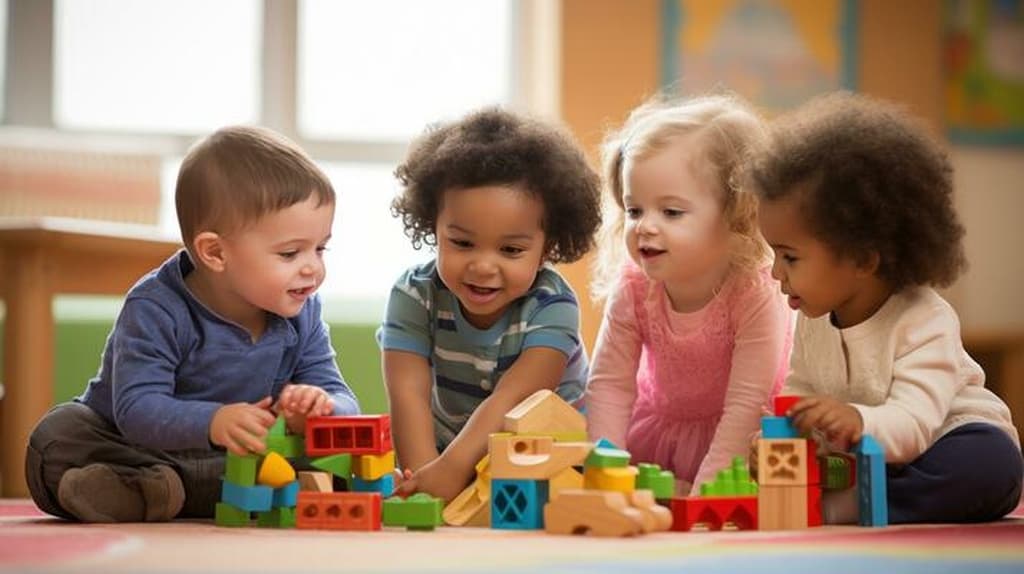
We’ve often seen this play out on the playground: a child with autism stands at the edge of a game, watching peers laugh and chase each other. The desire to join is there, but the “how” feels out of reach. Social connection doesn’t always come naturally, and without support, children can remain on the outside looking in.
At Unique Pathways, we believe that building social skills is not just about teaching behaviors; it’s about opening doors to belonging, communication, and lifelong confidence. Research confirms that structured, evidence-based approaches make a measurable difference. But more than that, our daily work with children and families shows us how those skills change lives in real time.
Here’s how we approach the journey.
Recognize the Challenge
Children with autism often face barriers in social reciprocity, conversation, and understanding the unspoken rules of interaction. These challenges show up in many ways: some children rarely initiate play with peers; others struggle to interpret facial expressions or maintain a back-and-forth exchange.
Research shows these difficulties can ripple into other areas, affecting academic achievement, emotional health, and independence. That’s why at Unique Pathways, we start with awareness. By recognizing the unique profile of each child, we ensure that our interventions are not only targeted but also meaningful.
Assess, Don’t Guess
We’ve learned that effective support begins with a full picture. That picture comes from multiple sources: validated assessment tools, careful observation across environments, and collaboration with families and teachers.
A child may appear confident in a therapy session but withdraw during recess. Parents may notice struggles at mealtime that aren’t visible in the classroom. These perspectives together give us a clearer understanding of the child’s real-world social functioning.
At Unique Pathways, we use this information to design individualized treatment plans that reflect both strengths and needs, because no two children with autism are the same.
Build the Foundation
Our work often begins with two core skills: joint attention and imitation. These may sound simple, but they are transformative.
Joint attention, the ability to share focus on an object or event, is the foundation for communication. Imitation, copying the actions, words, or gestures of others, creates the building blocks for social learning.
In our programs, we integrate these skills naturally into play, routines, and child-led activities. When a child points to a toy and looks to a peer for acknowledgment, or when they copy a clap or a word, they are not just practicing mechanics; they are learning connection.
Embed Learning in Everyday Life
We believe children learn best when teaching feels natural. That’s why our clinicians use naturalistic developmental behavioral interventions (NDBIs). Instead of drilling skills in isolation, we embed social instruction into play, routines, and interests.
If a child loves trains, we turn that passion into a lesson in turn-taking and conversation. If another loves music, we use rhythm and singing to build fluency and connection. Therapy should feel less like a chore and more like play, because when children are engaged, they learn more deeply.
Make Social Expectations Clear
For many children with autism, the social world is unpredictable. Tools like Social Stories help by breaking down expectations into simple, structured narratives. These stories explain what will happen, what is expected, and how the child can respond.
We also use video modeling, where children watch examples of social behaviors, sometimes featuring themselves. These visual approaches make abstract skills concrete, helping children feel prepared and confident in new situations.
Involve Peers
One of the most powerful ways to teach social skills is through peers. Research consistently shows that peer-mediated interventions lead to significant progress.
At Unique Pathways, we encourage structured peer programs, whether it’s a preschool game like “Stay, Play, Talk,” or buddy systems for older students. In these settings, children learn not only how to initiate but also how to sustain interaction. And peers, in turn, learn empathy, patience, and inclusion.
Practice and Rehearse
Social interactions can feel overwhelming. That’s why structured role-playing is such a valuable tool. Children practice scenarios, asking to join a game, ordering food, resolving a disagreement, in a safe, supported environment. Clinicians offer feedback and encouragement, gradually increasing complexity.
Our social skills groups expand this practice into peer settings. Children rehearse, experiment, and support one another under professional guidance. Families often tell us that even modest gains from these groups make a meaningful difference: a child who speaks up more, a friendship that feels possible, and less loneliness.
Match Skills to Development
What we target depends on the child’s stage of development.
For young children, we focus on simple building blocks: shared play, turn-taking, and early communication. For school-age children, we emphasize conversation skills, friendships, and problem-solving. For adolescents, we support more complex needs: navigating peer groups, developing empathy, and learning self-advocacy.
This developmental approach ensures that social skills are not only taught but also relevant to the child’s current world.
Extend Learning Across Settings
We know that children don’t live in therapy rooms. They live in homes, schools, and communities. That’s why generalization, carrying skills across environments, is central to our work.
At home, parents learn to embed social opportunities into routines. At school, we collaborate with teachers to create peer supports and structured opportunities. In the community, we practice real-life skills: ordering food, greeting neighbors, and navigating playground dynamics.
The more varied the practice, the more durable the skills.
Measure Progress in Meaningful Ways
We track progress through data and through stories. Data tells us how often a child initiates a conversation or responds to a peer. Stories tell us when a child greets a friend independently for the first time, or when a parent notices a dinner conversation flowing more easily.
Both matter. At Unique Pathways, we celebrate the numbers, but we also celebrate the moments, the ones that show connection is taking root.
Expect Challenges
Families sometimes worry when progress stalls. We reassure them that plateaus are part of growth. Skills take time to consolidate. Motivation may rise and fall. Generalization often takes repeated practice.
What matters is persistence and flexibility. We adapt strategies, we celebrate small wins, and we continue walking alongside families, knowing that growth often comes in waves.
Focus on the Long Term
Social skills development is a long-term process. Gains may be gradual, but they build toward something profound: greater independence, stronger mental health, richer relationships.
At Unique Pathways, we measure success not only by skill acquisition but also by quality of life. When children feel included, when families see new possibilities, when communities become more welcoming, those are the outcomes that matter most.
The Path Forward
We’ve often seen children who once lingered at the edge of a game eventually step in, invited and ready. That journey requires patience, partnership, and persistence, but it’s possible.
At Unique Pathways, our mission is to help children with autism develop the social competencies they need to connect, belong, and thrive. Each step, each smile, each new interaction represents more than progress. It represents hope.
We believe every child has a voice, and every voice deserves to be heard. We know that communication and connection don’t develop in the same way or at the same pace for everyone. That’s why our approach is never one-size-fits-all.
We meet each child where they are, using evidence-based methods woven into play, routines, and real-life experiences. We collaborate with families, schools, and communities because children don’t grow in isolation; they grow in relationships. And we measure success not only by skills gained, but by the moments that matter: a smile returned, a friendship formed, a confident “hello” spoken out loud.
Every child’s path is unique. Our role is to walk alongside them, guiding, supporting, and celebrating, step by step, as they discover their way into connection and belonging.